


Introduction to Percussive Fingerstyle Acoustic
If you’re finding yourself getting tired of the same old acoustic fingerstyle patterns, then perhaps you need to think about adding some percussive elements to your acoustic playing.
This style of acoustic playing can range from a very simple string hit or slap right up to virtuosic rhythms played at the same time as melody lines.
In this lesson we’re going to look at the absolute basics of percussive acoustic guitar and learn how you can integrate this into your playing right away.
Each of the 4 examples in this lesson are made up of just three chords:
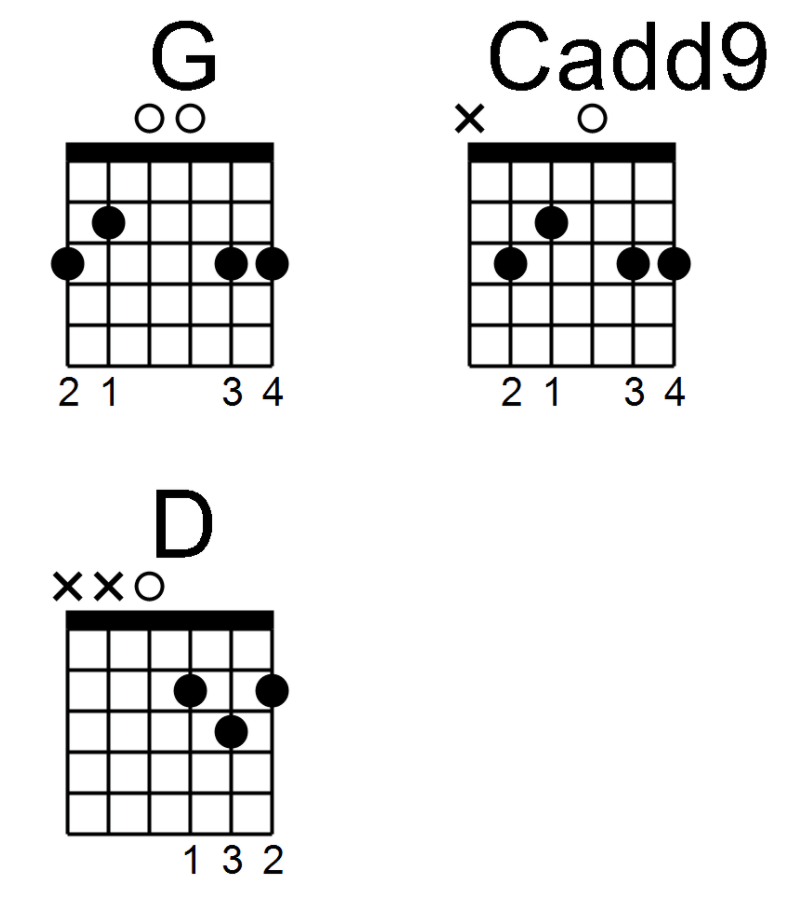
The percussive hit can be done by striking the strings with your thumb or the heel of your hand. Check out the video for a full demonstration of the technique.
Example 1
This first example just moves through the chords which are all played as a root note (On the lowest string of each chord – this moves from chord to chord) and a pair of notes together on the G and B strings.
The chords happen on the first and third beats of each bar.
On the second beat, you add your percussive hit.

Example 2
This example follows a similar rhythm to the first, except your splitting the first and third beats into a pair of eighth notes. This means you’re playing the root on the beat and the G and B strings on the “&”. The percussive hit still lands on the two and four.

Example 3
In this exercise you’re breaking up the second and third beats into eight notes. The first beat of each bar is the chord played as a root along with the G and B strings.
From the second beat you go into eighth notes. Add your percussive hit on the second beat, then on the “&” of the second beat hit just your root note. The third beat is made up of the notes on the G and B strings followed by the root again on the “&”, and the fourth beat is just the percussive hit.
Each chord in this example lasts for a full bar.

Example 4
This example has an element of John Mayer’s acoustic style in there. It’s played with a swing.
You’re playing straight eight notes all the way through, but on the second beat and on the fourth beat you split it into a pair of sixteenth notes. This doesn’t have to be played overly tight, it’s meant to have a groove and swing to it.
