


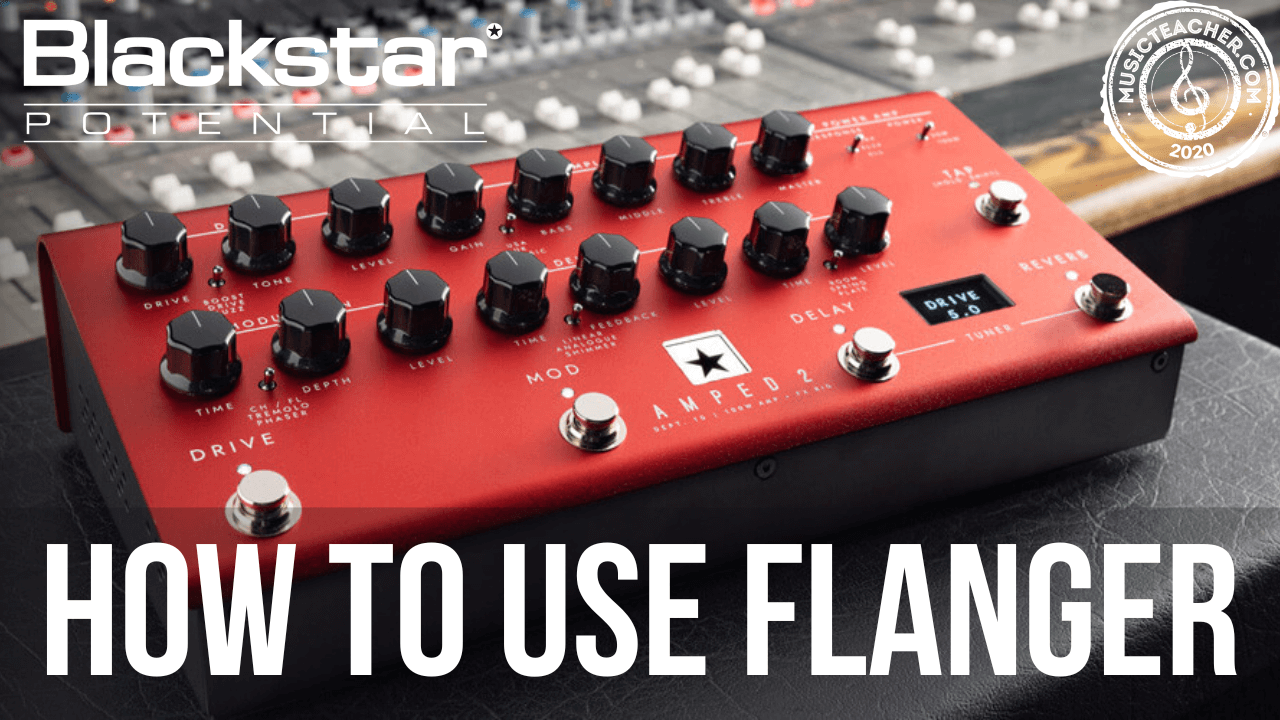
4 Ways to Use Flanger
Flanger is a modulation effect that has often been used in guitar music for it’s more extreme settings, but it can also be a very useful, textural modulation effect.
Flanger works by taking your guitar signal and splitting it into two signals. The second signal has an LFO applied which creates an oscillating effect when played against the original signal.
In this video we will be looking at a few ways to use Flanger in your guitar tone.
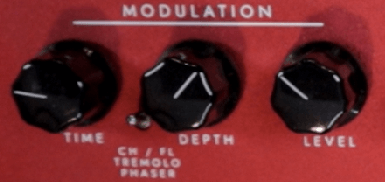
All the flanger tones are coming from the Amped 2. The Flanger mode is on the same switch position as chorus, but it occupies the upper range of the depth control. When the depth control is below 12 o clock it acts as chorus, above this it changes to flanger.
There are 3 controls you can use to affect your flanger tone:
- Time – The speed of the modulated effect
- Depth – The intensity of the effect
- Level – The output level of the effect
EVH Overdriven Style Flanger
One of the most famous users of Flanger was Eddie Van Halen. He would often pair a heavily overdriven rock tone with flanger to create some really unique sounds, think of the intro from the song Unchained for reference.
For this tone, you can use these settings. You don’t want the tone to be too extreme and detract from existing overdriven tone, it should emphasise the tone and add movement to it.
Adding Shimmer to Clean Tones
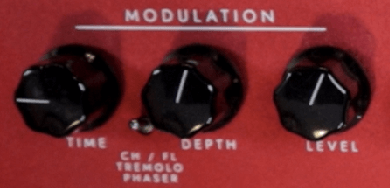
A subtle flanger paired with a clean tone can give great results.
It can offer you a great alternative to chorus. The LFO causes the flangers high end to be a little more pronounced when the oscillation cycle comes around each time, which means this tends to cut through a dense mix better than a chorus.
For this sort of tone, you want a slow speed and a very shallow depth. The level you can set to taste depending on how much of the flanger effect you want audible.
Using Flanger with Lead Guitar
You can use the same settings as the flanged clean tone but with a reduced level control to add a fullness to lead lines. The subtle LFO creates a fuller tone for single notes while adding character to everything you play.
Timing bends with the LFO speed can produce some sweeping, vocal like effects. You don’t want to add much depth or speed to this, keep it subtle.

Extreme Flanger
You can also use flanger in a very extreme way. This creates a very noticeable sweeping sound that is reminiscent of 1970s flanger style tones.
This is not the sort of tone you’d use on everything, but when you want a large sweeping sound, this is how you’d approach it.
The speed in this instance can be set to taste. The depth and level are full to get the maximum impact from the effect.
————————————————————————-
About the Author
This article on how to use flanger in your guitar tone was written by Leigh Fuge. Leigh is a professional guitarist and content creator and also works alongside musicteacher.com to create guitar focused, educational and entertainment content.
If you’re looking for a guitar teacher in your local area, check out their music teacher database to find your local teacher today. Each teacher has their own local page such as Guitar Lessons Nottingham. Find your local teacher today!