


Modes for Guitar – Part 3 – Major Modes as Pentatonic Shapes
There are also three major modes. The first of which is the Major Scale (The Ionian Mode) which happens to be the main scale that you use to begin most theory concepts that you learn. This is the first mode and also the starting point for the two other modes we’re going to look at in this lesson.
The two other modes we’re going to learn are the Lydian and Mixolydian modes. These are also linked to pentatonic so that you can easily integrate them into your playing.
We’re going to link these to the 5th shape of the Major Pentatonic scale because this shares a similar pattern to that of the first shape of the Minor Pentatonic. By using this shape, and this method of playing modes the root note for Major Modes is not in the usual root note place of the scale. You’ll notice other notes below the root in each scale shape.
The Pentatonic shape you’ll be using is this one:
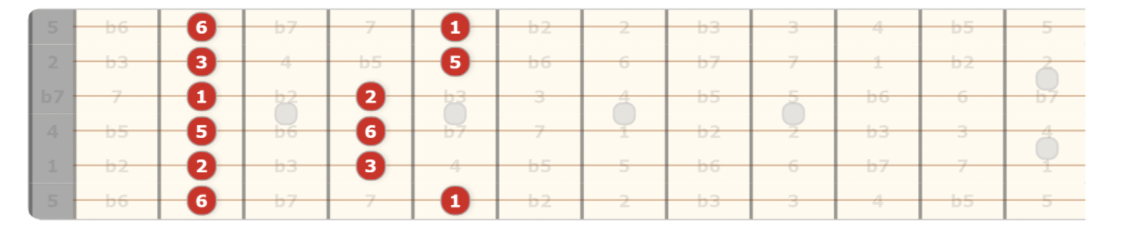
| I | II | III | V | VI |
| A | B | C# | E | F# |
All the scales here are shown in A Major but they can be transposed to any key by moving the shapes.
The two additional modes we’re going to learn can both be seen as alterations of the Ionian (Major Scale) Mode. Let’s recap on that first of all:
Ionian Mode
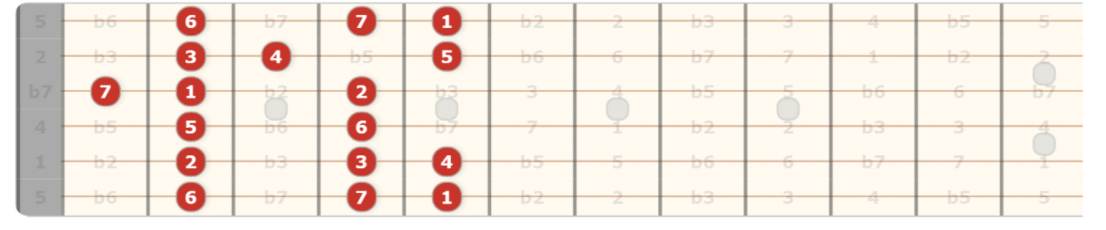
| I | II | III | IV | V | VI | VII |
| A | B | C# | D | E | F# | G# |
This mode is your regular major scale but re-shaped to fit that of a major pentatonic feel. This means in this position you can play standard pentatonic licks but add the major scale notes to your existing licks.
Lydian Mode
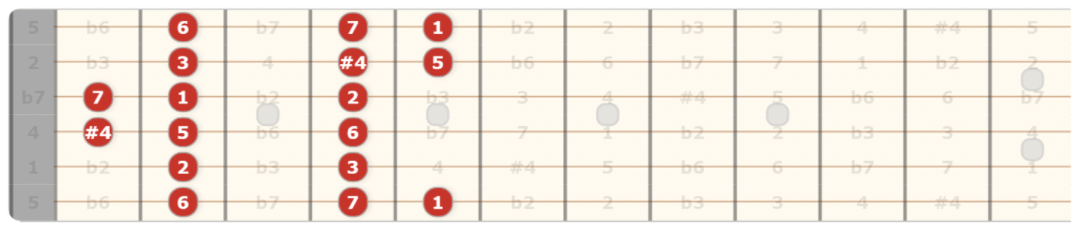
| I | II | III | #IV | V | VI | VII |
| A | B | C# | D# | E | F# | G# |
The Lydian Mode is a major scale with a #4 interval. The #4 is an interesting interval, which is also known sometimes as the b5 which we think of as the dominant interval in a diminished chord. The #4 can be a dissonant note to apply, but in the right context can sound great. The Lydian mode is great for fusion
Mixolydian Mode
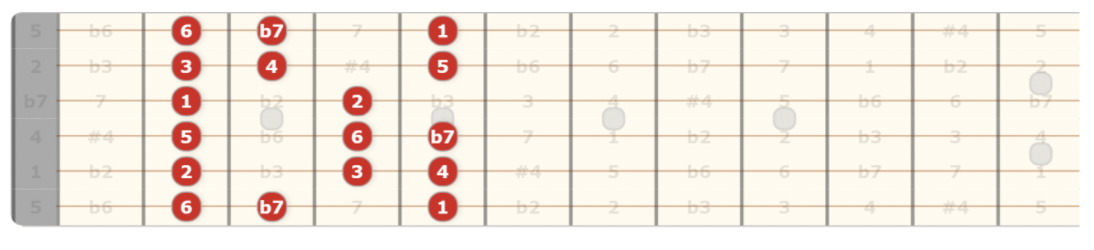
| I | II | III | IV | V | VI | bVII |
| A | B | C# | D | E | F# | G |
The Mixolydian mode is a great scale for rock and blues. Like the Dorian mode, this scale can easily create opposing feels with tonality. The natural 6 in the Dorian Mode gives minor licks a major flavour. The b7 in the Mixolydian has the opposite effect. If you’re playing a Mixolydian lick over a blues made of dom7 chords, the b7 note will give it a slightly minor feel.
Sharing Shapes
By the end of this lesson you may also notice that the three Minor Modes and the three Major Modes all share shapes. The thing that is different is which side of the root note they are situated.
- The Ionian Mode and Aeolian mode share a shape.
- The Lydian Mode and the Dorian Mode share a shape
- The Mixolydian Mode and the Phrygian mode share a shape.
If you discount the diminished mode that is not often used, you can play the most common 6 modes with three scale shapes, which are all linked to a pentatonic shape.